01
Sorting
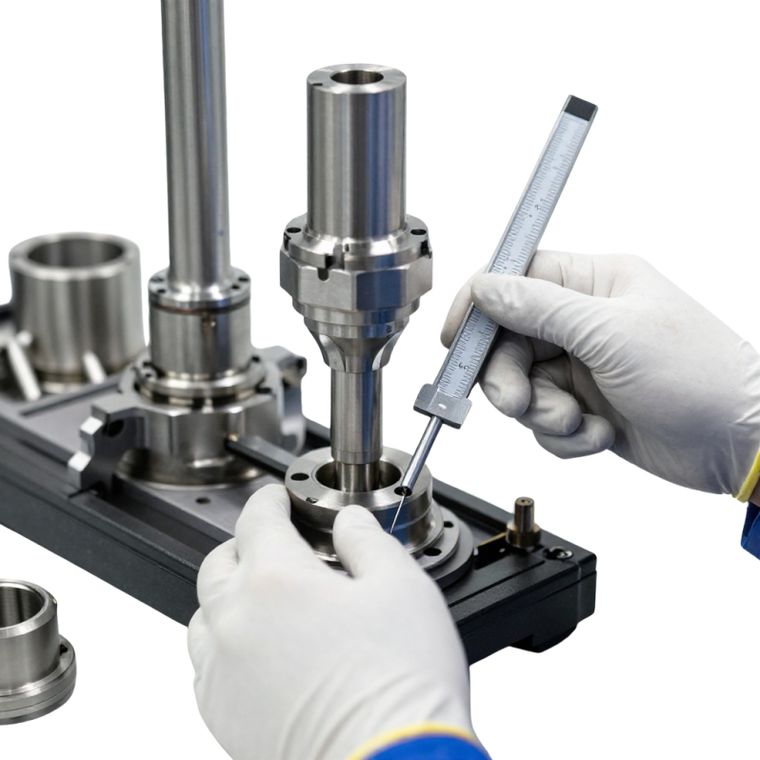
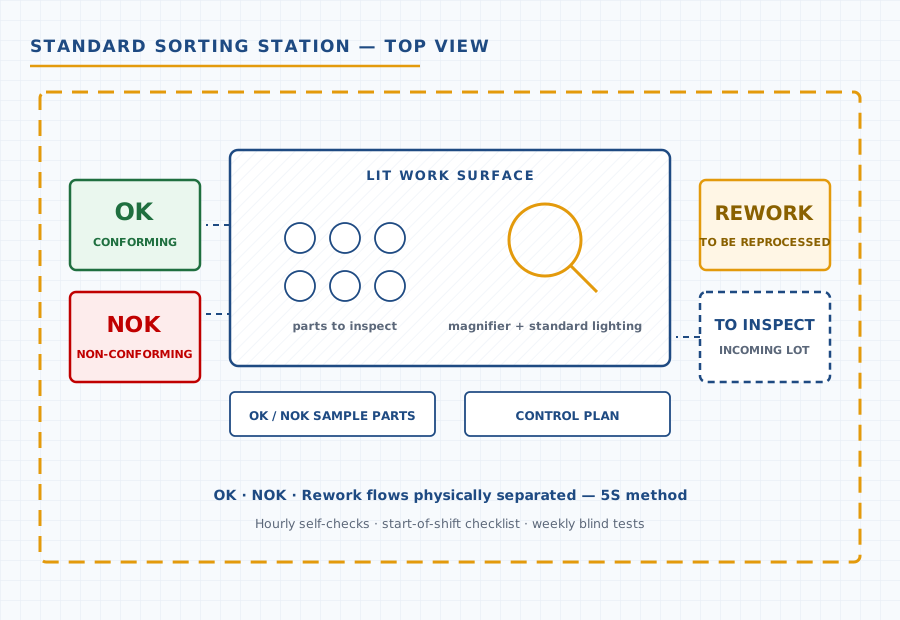
Separating conforming from non-conforming parts against your acceptance criteria. By sampling or 100 %, on blocked lots as well as on your running flow.
- Part marking and identification
- Counting and repackaging
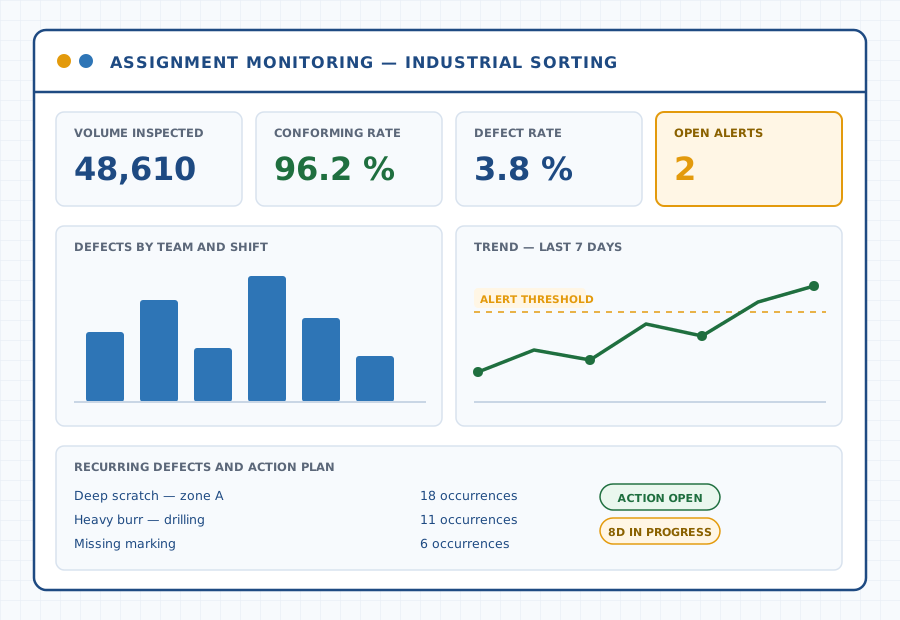
- Defect log by category

Sorting, quality wall and rework by qualified inspectors. We deploy quickly at your site or at your supplier's, with full traceability on every part inspected.
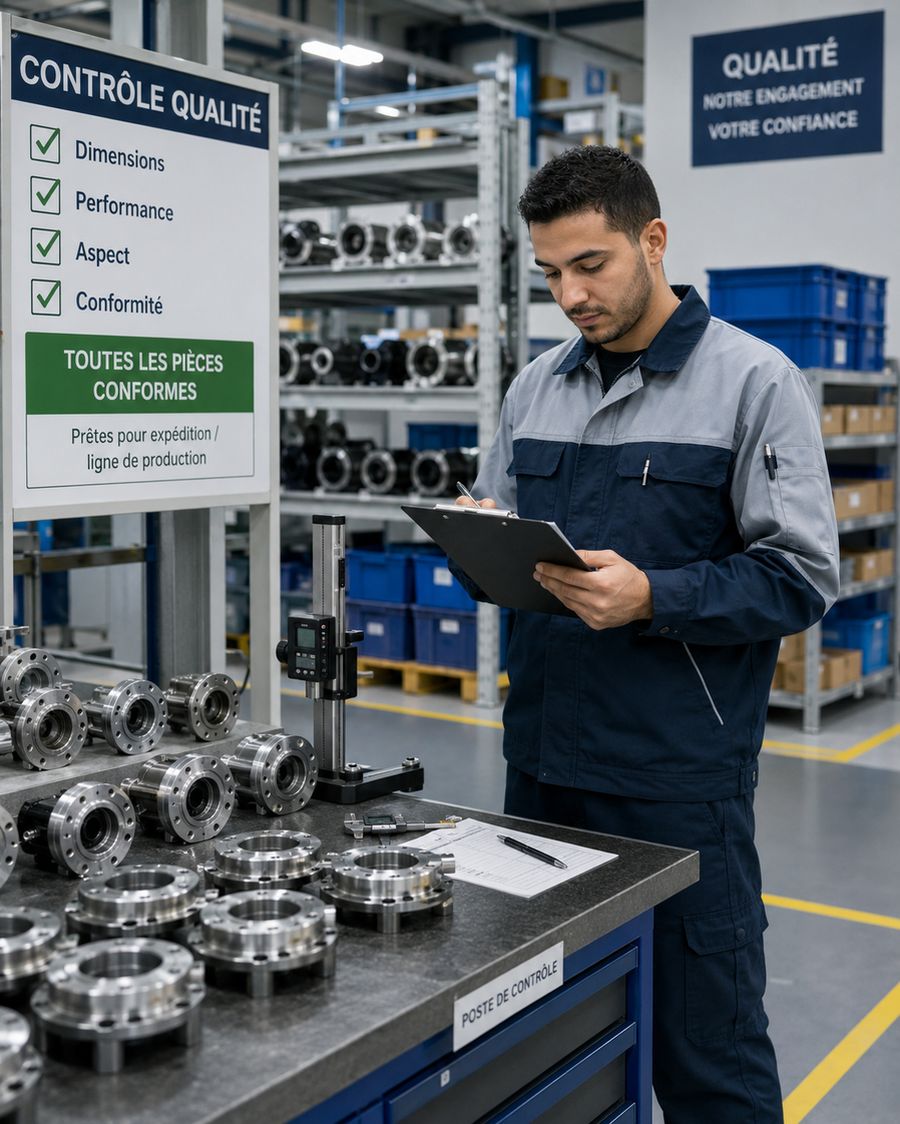
Many can count parts. Few can explain why the defect appeared, and fewer still can stop it from coming back.
Emergency mobilisation in a quality stoppage, once your acceptance criteria are shared.
Staff trained on IATF 16949 and EN 9100 requirements and on quality tools: PFMEA, 8D, 5S, control plan.
From a few days of reinforcement to running a long-term quality wall across several shifts.

Sort today. Understand the risks. Prevent tomorrow's defects.
Every intervention starts from a control plan validated with you, and ends with a traceable report, part by part.
Separating conforming from non-conforming parts against your acceptance criteria. By sampling or 100 %, on blocked lots as well as on your running flow.
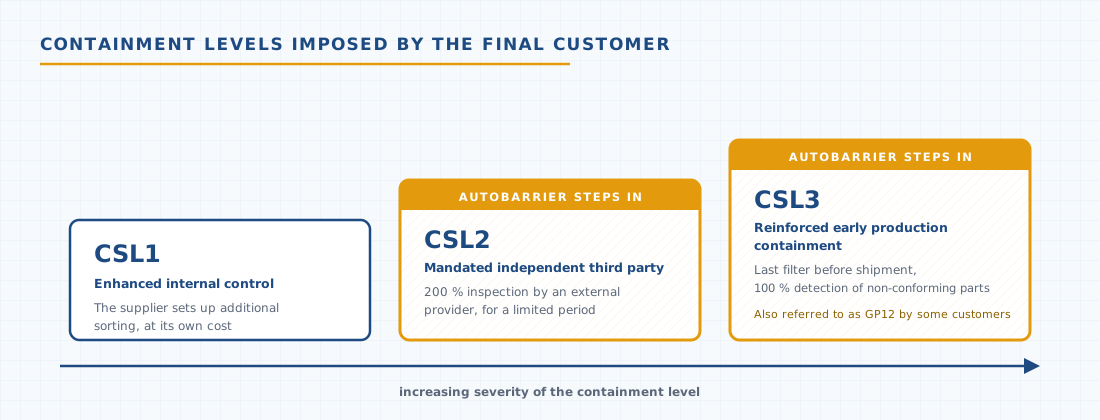
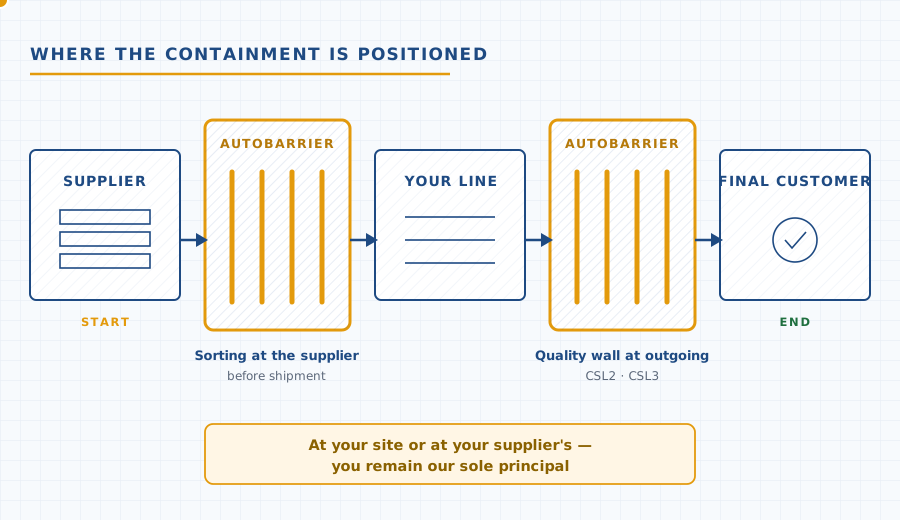
A containment firewall deployed at short notice to stop any non-conforming part from reaching your final customer. 100 % inspection, around the clock if needed.
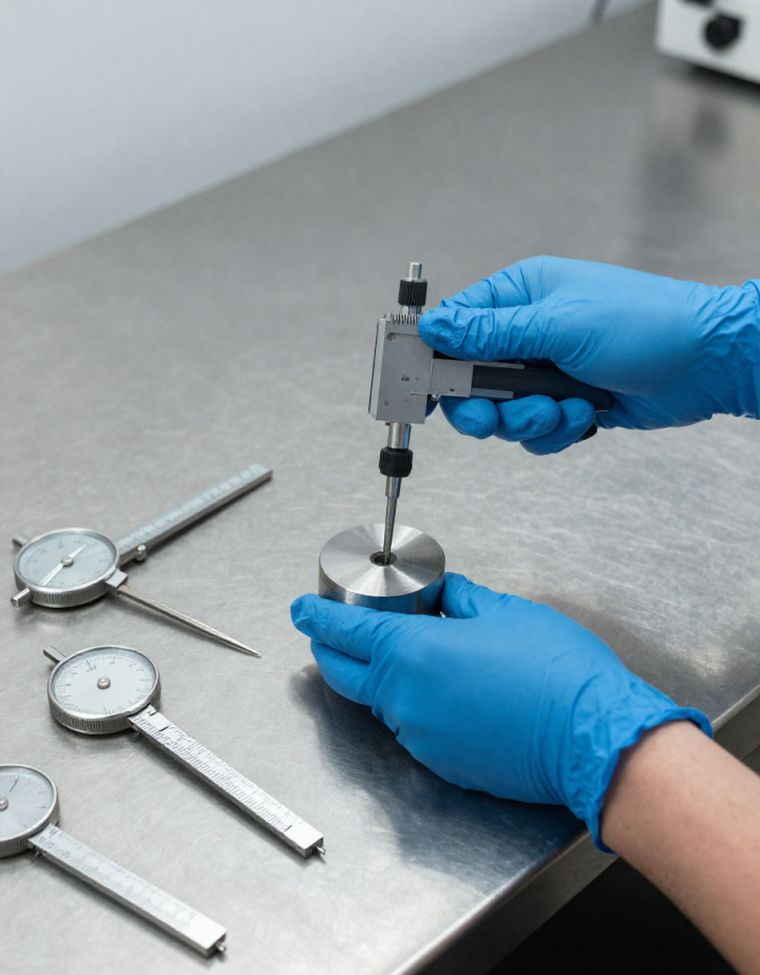
Recovering non-conforming parts following a work instruction you approve, so they can be brought back into conformity instead of scrapped.

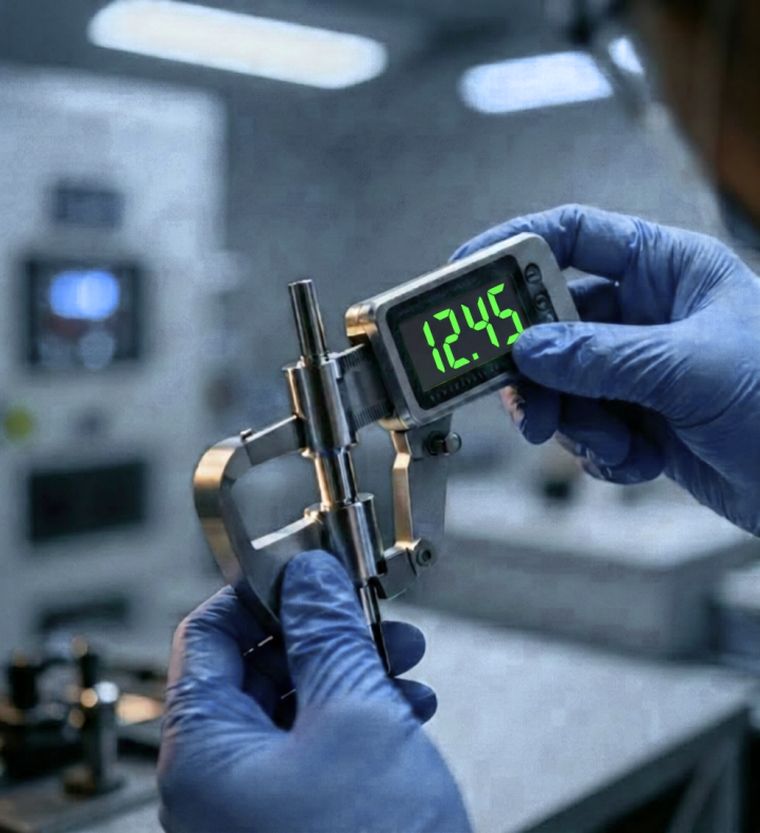
Visual and dimensional control against your drawings and specifications, using measuring equipment under metrological control.
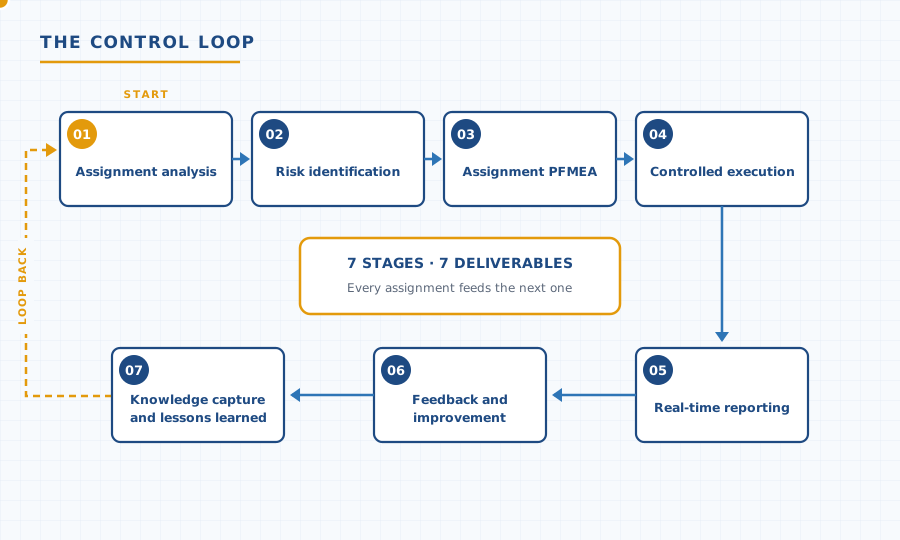
From risk analysis to knowledge capture, we protect your production, your final customer and your quality reputation. Every stage produces a deliverable you keep.
Sort today. Understand the risks. Prevent tomorrow's defects.
We do not simply inspect parts. We turn every sorting assignment into a prevention system that allows you to:
These are not words on a brochure: each of these tools produces a document you receive.
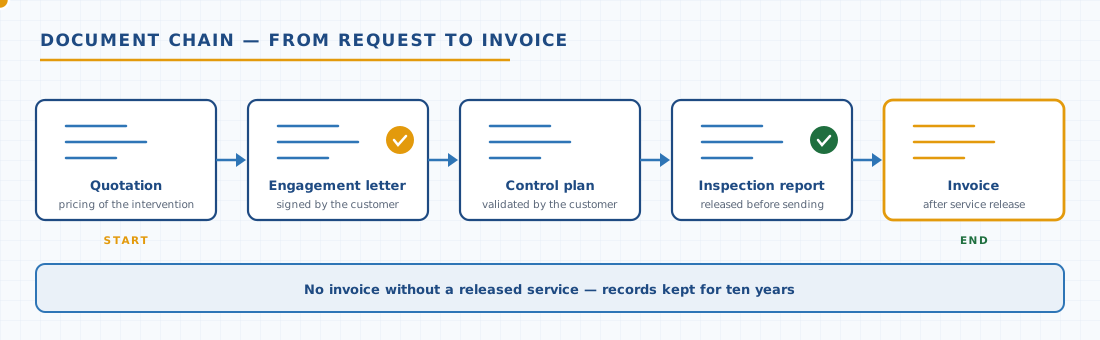
A simple documented chain, traced at every step — that is what makes our reports usable against your suppliers.
Part number, volume, site, defect to look for, urgency. One conversation is enough to frame the job.
An engagement letter setting out scope, headcount, working hours and rates. Nothing starts without your signed approval.
Acceptance criteria, equipment, throughput and marking — validated by you before the first part is inspected.
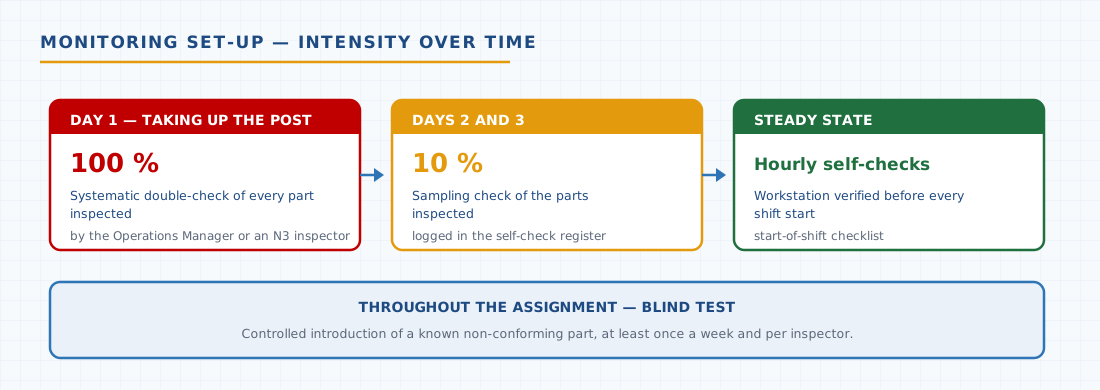
Certified inspectors, hourly self-checks, regular blind tests to verify detection reliability.
Daily report during the intervention, and a closing report with duration, quantities processed and full traceability.
Our inspectors are trained on the standards and expectation levels specific to each sector.
Rules we hold ourselves to, not slogans.
We mobilise a first team quickly in a quality emergency, as soon as we have your acceptance criteria.
Every part inspected is marked and linked to a lot, a date and an inspection station. Our records are kept for ten years.
We report to our principal and to nobody else. None of our inspectors accepts instructions aimed at altering a finding.
A signed individual undertaking from every inspector. Your drawings, scrap rates and difficulties stay within the assignment.
We operate under a quality management system aligned with ISO 9001:2015: written procedures, traced certifications, internal audits.
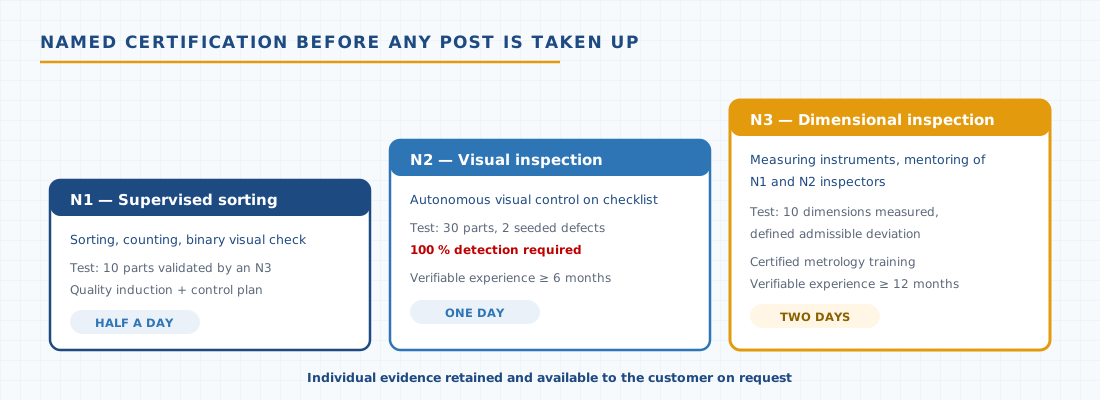
No inspector takes up a post without prior named certification, approved by our operations manager.
They are not decoration: each is signed by management, circulated to every employee and reviewed annually. Here is what they say.
Quality sits at the core of our strategy. We deliver reliable, accurate inspections within the agreed lead times.
Zero tolerance for corruption and fraud. As an independent inspector, our credibility rests on the absolute integrity of our reports.
The drawings, specifications and inspection results you entrust to us are protected as if they were our own.
Our inspectors are our main asset. We invest in their competence and in their safety.
The quality of our services also depends on our suppliers, starting with our calibration laboratories.
Our travel, our energy use and our waste have an impact. We reduce it.
The full text of each policy is available on request.
Yes — it is a large part of what we do. You remain our sole principal and our only counterpart: we report to you. You arrange site access with your supplier, and we provide every supporting document you need if you intend to charge the costs back to them.
It depends on the site and the volume. For an emergency we mobilise a first team as quickly as possible once we have your acceptance criteria and site access is granted. The exact lead time is confirmed in the engagement letter.
By hours actually worked on site, based on a timesheet signed by both parties every day. Fixed price and price per part are possible depending on the assignment. The details are set out in the engagement letter before anything starts.
No — and be wary of anyone who promises it. Visual and manual inspection carries an element of variability recognised across the industry. We are held to a best-efforts obligation and we put monitoring in place — hourly self-checks, weekly blind tests, double-checking of newly assigned inspectors — so that the detection rate is as high as possible and, above all, measurable.
The duration of the intervention, the quantities processed, the breakdown of defects by category, and full traceability: part numbers, lot numbers, dates and inspection stations. It is the document you can present to your final customer or to your supplier.
We provide our inspectors' personal protective equipment and the standard inspection means set out in the control plan. Specific measuring equipment and reference sample parts are supplied by you, together with their calibration certificates.
Tell us about the situation. We will come back to you quickly with a proposed intervention.